
Knee Replacement Surgery in Lucknow
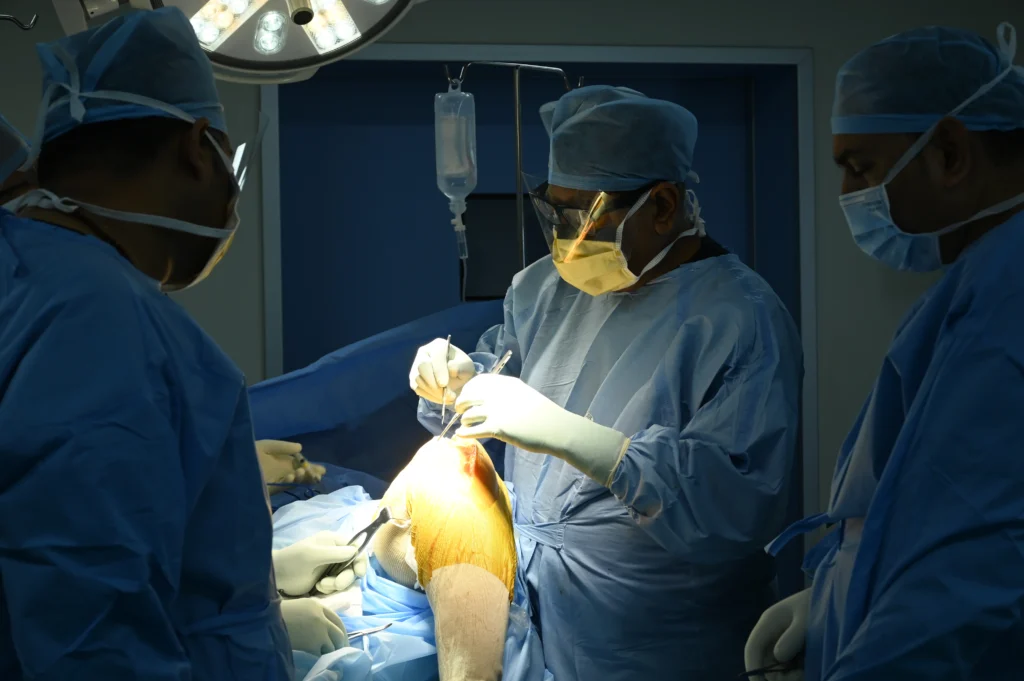
Knee replacement surgery in Lucknow is an effective treatment for severe knee pain, arthritis, and joint damage. Dr. Sandeep Kapoor is a highly experienced knee replacement surgeon in Lucknow, specializing in advanced and robotic-assisted procedures that restore mobility, reduce pain, and improve quality of life.
Knee replacement surgery in Lucknow helps patients regain mobility and live pain-free when conservative treatments no longer provide relief.
Anatomy of the Knee
The knee joint is made up of bones, ligaments, cartilage, and tendons that work together to allow smooth movement.
The main bones include the femur (thigh bone), tibia (shin bone), and patella (kneecap). Ligaments connect these bones and provide stability, while cartilage covers the bone surfaces and helps absorb shock.
A healthy knee moves smoothly during walking, bending, and rotation. When the joint is damaged, this smooth movement is affected, leading to pain, stiffness, and reduced mobility.
Stages of Knee Joint Damage
Knee damage usually develops gradually. Over time, cartilage begins to wear away and loses its ability to cushion the joint.
As the condition progresses, bones may start rubbing against each other, causing pain, swelling, and stiffness. In advanced stages, joint movement becomes severely restricted, making daily activities difficult.
Causes of Knee Damage
- Osteoarthritis and age-related wear and tear
- Joint deformities such as bow legs or knock knees
- Previous injuries or fractures
- Secondary arthritis due to underlying conditions
Symptoms of Knee Problems
- Pain while walking, standing, or bending
- Reduced ability to walk long distances
- Persistent pain even at rest
- Joint stiffness and swelling
- Difficulty climbing stairs or getting up
- Grinding or clicking sounds in the knee
- Joint deformity or instability
In principle, Total Knee Replacement or TKR is the replacement of the diseased knee joint by an artificial implant. Many decades ago, the relatively simple structure of the knee joint – the condyle of femur and distal tibia – had inspired surgeons and medical technicians to create an artificial copy, and in the course of time, follow – up examinations and improvements in operative methods and materials have led to great progress, and the optimization of total knee prosthesis.
The knee prosthesis is designed to simulate the human anatomy to knee joint and is comprised of a femoral component, tibial base plate, polyethylene insert and patellar components.
The femoral component will fit in the condyle portion of femur bone; the tibial base plate will fit on the distal tibia, polyethylene insert will act like the cartilages, the patella component will resemble the original patella. The femoral component will glide smoothly over the polyethylene insert, thus allowing you to walk, squat and turn without pain.
These components are made up, of metal, ceramic or polyethylene. All these materials have been specially developed for medical purpose with good tissue tolerance and allow the function to be as painless and lasting as possible.
Over the years your knee joint takes many stresses and strains during daily activities. When a disease process or injury to your knee occurs, the cartilage surface of the knee joint degenerate or wear out.
During total knee replacement surgery, the diseased and / or arthritic ends of the bones are removed. A metal component is secured to the femur and plastic components are attached to the tibia and patella. In this way, the smooth surfaces of the knee joint are restored, pain-free motion is again possible and it works as a normal knee joint.
For each implant type, there is a wide range of models manufactured in different sizes as the anatomy of the knee varies from one individual to another. The surgeon will prepare for the operation on your knee joint with a graphic plan compiled on the basis of X-rays and will thus determine the model, size and position of the implant parts.
Material used for artificial joints are highly developed. They provide maximum tolerance and long-term acceptance by the human body, which is called bio-compatibility. Material development and fundamental know-how in metallurgy, material, research and testing. In general, there are two different types of material employed for orthopedic purposes Metals & Polymers (ultra high molecular weight polyelrylene).
- Persistent pain in the joint recurring regular pain killers, affecting activities of daily living & compromising your quality of life.
- When other treatments like medicines, plysiotherapyetc have failed and no other alternative treatment is likely to.
- X-ray confirming advanced arthritic changes in the joint.
Before Surgery – Getting yourself ready Having decided to perform the total knee replacement surgery for you, various members of the staff will help you to prepare for the surgery as well as your recovery. At any time, if you have any doubts or require any clarification, please feel to call on your surgeon. An anesthetist will visit your for pre-operative examination and assessment, if it has not been done before. An orthopaedic team will again visit you to give a final check and be available for any last minute questions. Please make sure you inform about all the medicines you are taking at the moment for Hypertension, Diabetes etc. to the visiting Physician
What’s Involved in a Total Knee Replacement – TKR?
Knee Replacement Procedure
During the procedure, the damaged portions of the knee joint are removed and replaced with artificial implants. These components are carefully positioned to restore alignment and ensure smooth joint movement.
The surgery is performed using advanced techniques that improve precision, reduce tissue damage, and support faster recovery.
Recovery After Knee Replacement
- Early movement begins within 24 hours
- Walking with support is encouraged
- Pain and swelling gradually reduce
- Most patients resume normal activities within weeks
Physiotherapy After Knee Replacement
Physiotherapy is essential for regaining strength, flexibility, and mobility after surgery.
Physiotherapy aims to
- Improves joint movement and strength
- Helps restore walking ability
- Builds confidence in daily activities
Post-Surgery Precautions
- Avoid heavy lifting and sudden movements
- Follow physiotherapy instructions carefully
- Use walking support as advised
- Attend regular follow-up appointments
When to Contact Your Doctor
- Persistent swelling or severe pain
- Signs of infection or fever
- Difficulty in movement or numbness
Knee Replacement Surgery Cost in Lucknow
The cost of knee replacement surgery in Lucknow depends on factors such as implant type, hospital facilities, and whether robotic technology is used. While robotic knee replacement may cost slightly more, it offers better precision, faster recovery, and improved long-term results.
Who Needs Knee Replacement Surgery?
Knee replacement surgery is recommended for patients with severe arthritis, chronic knee pain, stiffness, or reduced mobility that does not improve with medication or physiotherapy.
Learn more about robotic joint replacement in Lucknow or consult an experienced orthopedic surgeon in Lucknow. Choosing an experienced knee replacement surgeon in Lucknow ensures accurate diagnosis, proper implant selection, and better long-term outcomes.
- Robotic Joint Replacement
- Knee Replacement
- Hip Replacement
- Arthritis
- Osteoarthritis of Knees
- Osteoarthritis of Hips
FAQS
What is total knee replacement surgery?
Total knee replacement surgery is an advanced procedure in which damaged knee joint surfaces are replaced with artificial implants to relieve pain, improve mobility, and restore knee function. Dr. Sandeep Kapoor in Lucknow provides personalized evaluation and advanced knee replacement treatment based on each patient’s condition.
Who is the knee replacement surgeon in Lucknow?
Dr. Sandeep Kapoor is one of the renowned knee replacement surgeons in Lucknow, specializing in knee replacement, total knee replacement, and advanced joint replacement procedures. He focuses on accurate diagnosis, modern surgical techniques, and patient-centered care for better recovery and mobility.
Where can I get total knee replacement surgery in Lucknow?
Patients can consult Dr. Sandeep Kapoor in Lucknow for total knee replacement surgery. He provides advanced orthopedic care and helps patients choose the right treatment approach based on their knee condition, arthritis severity, and overall health.
Is total knee replacement better than other knee treatments?
Total knee replacement is recommended when severe arthritis, joint damage, or chronic knee pain does not improve with medicines, physiotherapy, or injections. Dr. Sandeep Kapoor in Lucknow evaluates each patient to determine whether knee replacement is the most suitable option.
How is total knee replacement performed?
Total knee replacement involves removing damaged cartilage and bone from the knee joint and replacing them with artificial implants. Dr. Sandeep Kapoor in Lucknow uses advanced surgical techniques to restore knee alignment, reduce pain, and improve joint function.
How can I prepare for joint replacement surgery?
Preparation for joint replacement surgery includes medical evaluation, required tests, maintaining healthy weight, controlling conditions like diabetes or blood pressure, and following your surgeon’s instructions. Dr. Sandeep Kapoor in Lucknow guides patients through every step before surgery.
What conditions require joint replacement?
Joint replacement may be required for conditions such as severe osteoarthritis, rheumatoid arthritis, joint damage due to injury, chronic pain, stiffness, deformity, and reduced mobility. Dr. Sandeep Kapoor in Lucknow provides expert assessment and treatment options for patients needing joint replacement.
Who is the knee replacement surgeon in Lucknow?
Dr. Sandeep Kapoor is one of the experienced knee replacement surgeons in Lucknow, offering advanced treatments for knee arthritis, total knee replacement, and joint-related conditions with a focus on improving patient mobility and quality of life.
How is total hip replacement surgery performed?
Total hip replacement surgery involves removing the damaged parts of the hip joint and replacing them with artificial implants made of durable materials. Dr. Sandeep Kapoor in Lucknow uses advanced surgical techniques to restore hip function, reduce pain, and improve mobility.